Estimated Reading Time: 2 minutes
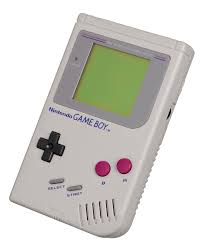
The Nintendo Game Boy is an 8-Bit handheld console that was released in 1989 and instantly became a success, with over 118 million units sold worldwide. While it may seem very simple in design and function, especially in the modern day, the Game Boy defined a generation of handheld gaming worldwide, with titles such as Pokémon and Tetris being featured and introduced.
Its key features included a green-tinted monochrome display, a very impressive battery life span, impressive durability, and 4-channel stereo sound. It also included a unique Game Link cable that allowed players to connect for competitive or cooperative gameplay together!
The Game Boy was additionally the first handheld console to allow players to switch games, such as the previously mentioned Pokémon, Tetris, and Super Mario Land.
As time passed, the much smaller Game Boy Pocket succeeded the system and eventually the Game Boy Color, and much later on, the Game Boy Advance. All of these consoles maintained backwards compatibility with the original Game Boy’s titles.
Like some of Nintendo’s home consoles, the Game Boy had a few console rivals of its own. Competing against the Sega Game Gear and the Atari Lynx, Nintendo had used a strategy of “lateral thinking with withered technology” by prioritizing the Game Boy’s superior battery life, a relatively low price for affordability, and its iconic library of games over making the Game Boy heavily advanced or expressive to compete with its rivals.
Overall, the Game Boy’s importance in portable handheld gaming still has an influence on future consoles that came after it, such as Nintendo’s DS and Nintendo Switch systems. It focused on convenient portability, simple but fun gameplay, and a long-lasting battery life that helped Nintendo shape the way handheld gaming grew and became innovative for decades to come. It has remained as one of the most iconic, if not the most iconic, handheld consoles even after so many years since its release.